Alert ID
8814
SOC Analysis | SIEM | Phishing Investigation
A simulated SOC investigation using Splunk to triage a medium-severity phishing alert, correlate email and firewall telemetry, evaluate business context, and document a defensible false positive disposition.
Investigation Snapshot
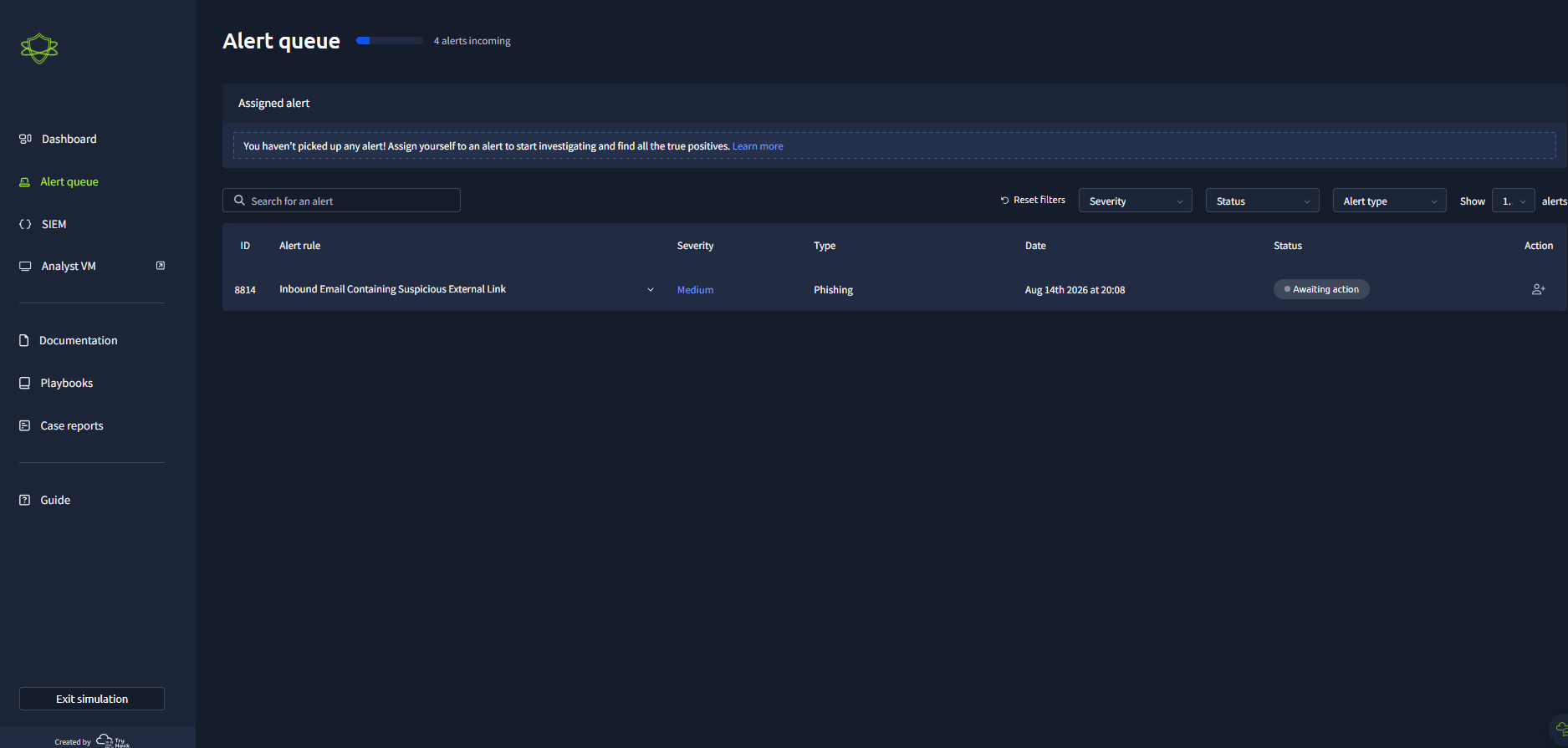
8814
Medium
Inbound Email Containing Suspicious External Link
hrconnex.thm
Email + Firewall Telemetry
Splunk Enterprise
False Positive
Objective: Determine whether the suspicious onboarding email represented legitimate business activity or a phishing attempt.
Activity Time: August 14, 2026 at 20:06:10
Direction: Inbound
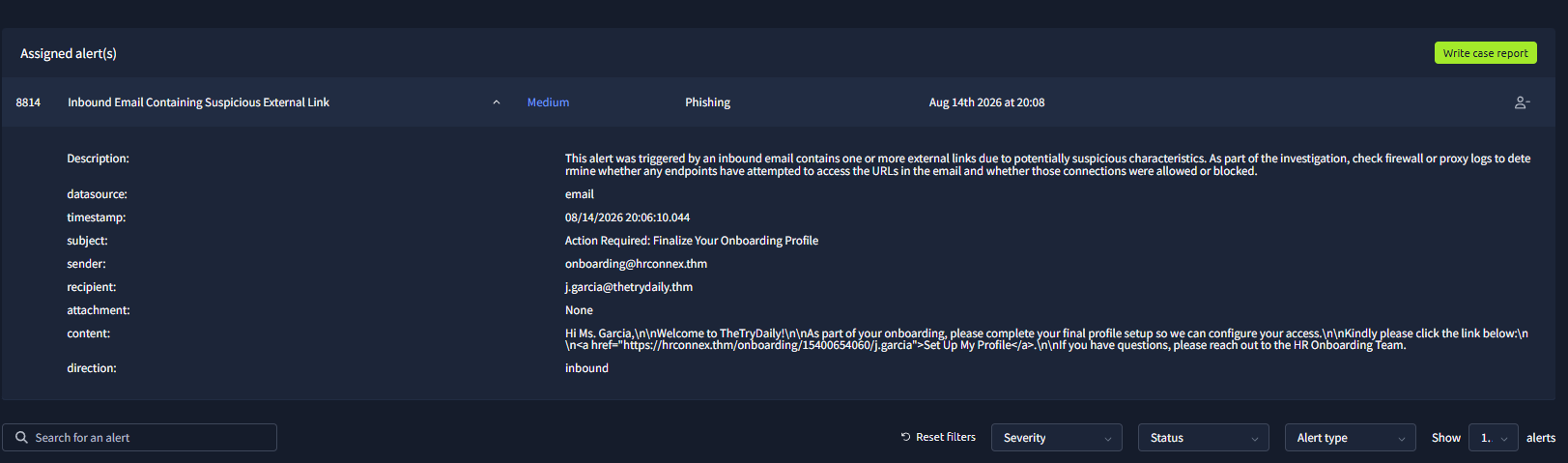
Sender: onboarding@hrconnex.thm
Recipient: j.garcia@thetrydaily.thm
Domain: hrconnex.thm
URL: https://hrconnex.thm/onboarding/15400654060/j.garcia
Investigation
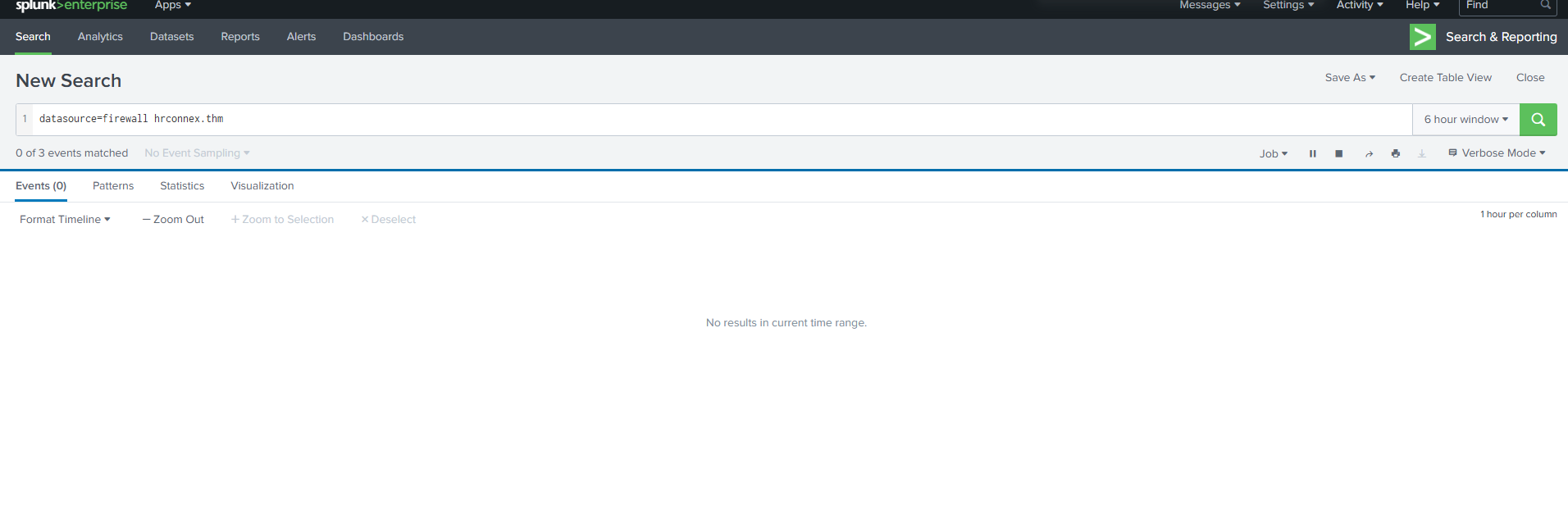
hrconnex.thm to identify related events across the available telemetry.datasource=firewalldatasource=firewall hrconnex.thmFindings & Disposition
hrconnex.thm as a third-party HR provider.False Positive
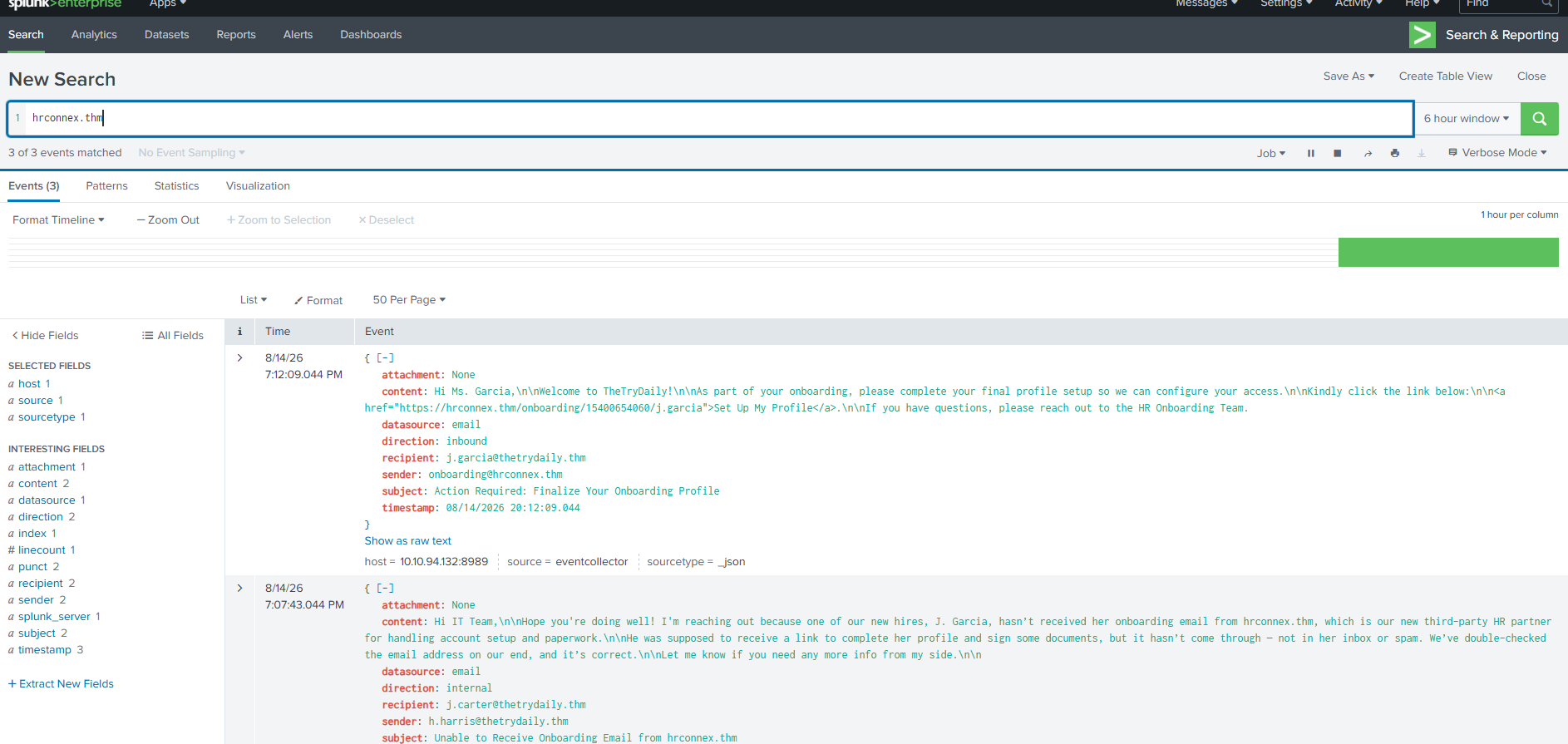
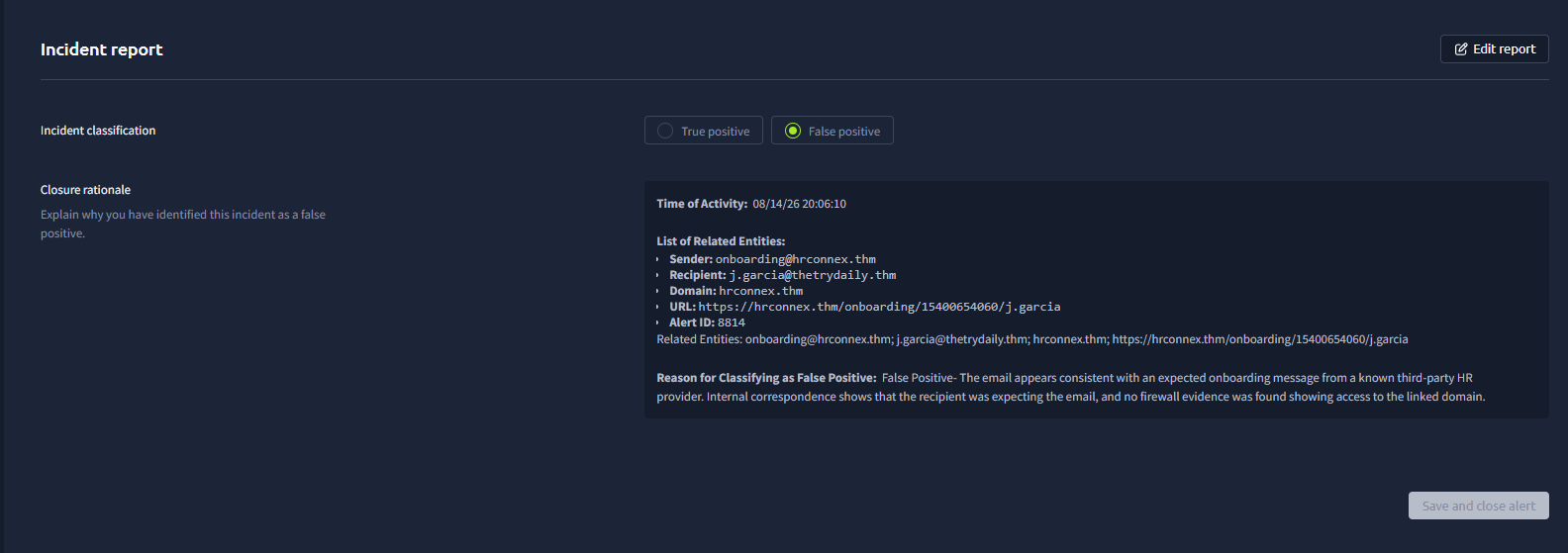
The email appeared consistent with an expected onboarding message from a known third-party HR provider. Internal correspondence confirmed the recipient was expecting the email, and no matching firewall activity for the linked domain was identified during the investigation window.
Alert severity alone was insufficient to determine risk. Correlating the email with business context and firewall telemetry changed the disposition from suspicious activity to a defensible false positive.
Investigation Evidence
Expandable screenshots are shown in investigation order.
Shows the medium-severity alert for an inbound email containing a suspicious external link.
Shows the sender, recipient, external domain, onboarding URL, and email artifacts identified during initial triage.
Shows the Splunk search for hrconnex.thm and related email telemetry used to establish business context.
Shows the query datasource=firewall hrconnex.thm with no matching firewall events identified in the selected window.
Shows the completed incident report, related entities, closure rationale, and false positive classification.
Skills Demonstrated